


Categories
- News (236)
- Support (262)
- OEM & ODM (10)
- Drivers & Tools (10)
- Instructions (29)
- Troubleshooting (44)
- Knowledge (97)
- Maintainance (8)
- Blog (90)
Sometimes customers inquire with Sunany sales team: What is the difference between POS and POS system? POS (Point of Sale) and POS system are two terms often used interchangeably, but they actually refer to slightly different concepts in the world of retail and business management.
POS, standing for Point of Sale, typically refers to the physical location or specific point in a retail store or business where a transaction takes place. It could be a checkout counter, a cashier station, or even a mobile device used by sales associates to process payments.
On the other hand, a POS system encompasses not only the physical point of sale but also the entire software and hardware infrastructure used to facilitate transactions and manage various aspects of the business. A POS system includes components such as the POS terminal (the hardware used to process transactions), POS software (the application used to ring up sales, manage inventory, and generate reports), peripherals like barcode scanners and receipt printers, and often integrates with other systems like inventory management and accounting software.
In summary, while POS refers specifically to the physical location or point where transactions occur, POS systems encompass a broader ecosystem of technologies and tools used to facilitate these transactions and effectively manage a business. The Sunany team can provide customized POS systems according to the enterprise’s retail environment, and is committed to providing users with one-stop and high-quality POS system solutions, and welcome to contact the Sunany sales team with your requirements.
 DDR4 vs. DDR5 for POS Software: Which Is the Better Choice?
 Before a POS SSD Replacement, Prepare the Software Restore
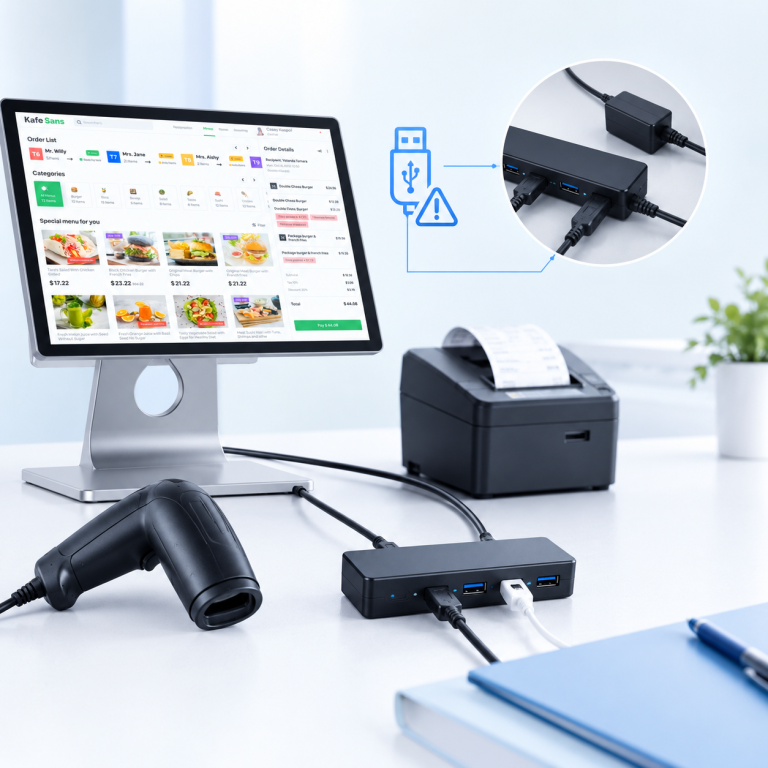 A Simple USB Hub Test for POS Device Disconnections
 Why Is Your POS Cash Drawer Not Opening
 Why Is a Thermal Receipt Printer Printing Blank Receipts